
The Rat Tangle
Why your relationships can't stop repeating the same painful patterns

If you’re new here, this post stands alone — but for the full context, start with The Water You’re Swimming In
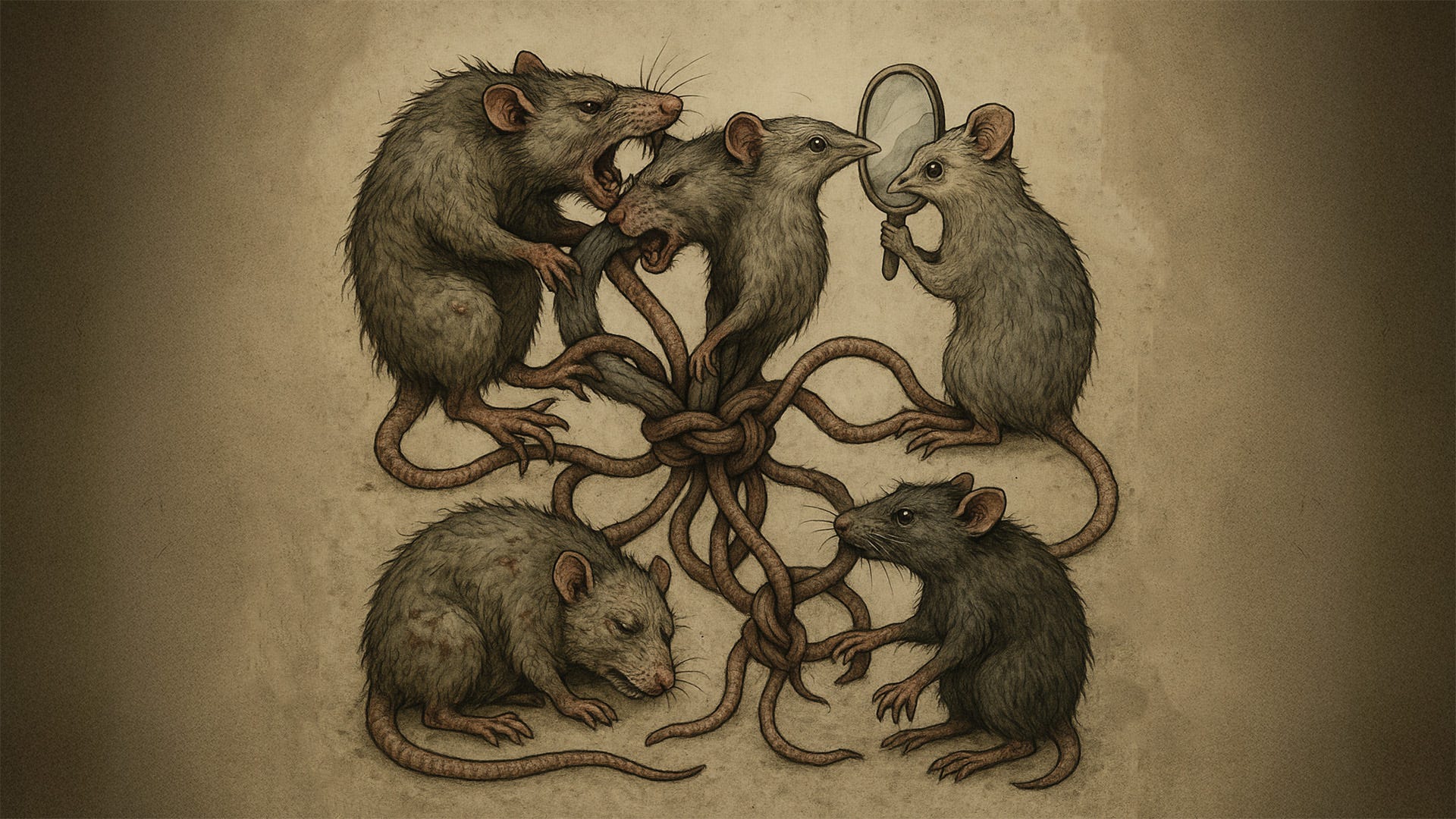
Scientists call this a “rat king”—a real phenomenon where rats’ tails become so tangled together they can’t separate. The illustration above depicts what researchers have documented for centuries: rats found mummified in this state, stuck together until death.
(If you’re skeptical, search “rat king” and look at the museum specimens. But fair warning: the actual photographs are more disturbing than this artistic interpretation. The reality is exactly as horrifying as it sounds.)
They’re trapped. When one tries to move, it pulls the others. When one tries to eat, the others get dragged along. They live like this—desperate, slowly dying—until death finally frees them, one at a time.
Look at this and notice what happens in your body. That sick feeling in your stomach? That’s recognition.
This is your family dinner table. This is your workplace. This is your marriage. This is that friend group where you walk on eggshells. This is why you feel exhausted after visiting your parents. This is why your romantic relationships start beautiful and turn into power struggles.
Those aren’t tails binding the rats together. In your life, it’s invisible threads of guilt, obligation, fear, and desperate need. You’re all tangled up with people you love, and nobody knows how to get free without hurting everyone else.
If you’re feeling disturbed recognizing this, remember what we explored in Part 3 about conscious incompetence - this uncomfortable awareness is exactly where real growth becomes possible. The discomfort isn’t a sign something’s wrong with you. It’s accurate information about patterns that have been running your life unconsciously.
Not Everyone Grew Up in a Rat Tangle
Before we go deeper, let’s clear something up. Some of you are looking at this image thinking, “That’s not my family. We had problems, but nothing like that.”
You’re right to notice the difference. Some families manage to create genuine connection, even within difficult circumstances. Some parents find ways to meet their children’s needs for safety, love, and belonging—not perfectly, but well enough.
If you had moments of real attunement with a parent, times when conflict got resolved instead of buried, experiences of being truly seen and valued—those are profound gifts. They’re also evidence that the rat tangle isn’t inevitable.
But here’s what’s tricky: even in relatively healthy families, these patterns can show up in pockets. Maybe your family was solid, but your workplace isn’t. Maybe your parents loved you well, but your romantic relationships keep tangling. Maybe you navigate friendships beautifully but notice these dynamics in community organizing or activism.
The rat tangle isn’t an all-or-nothing thing. It’s a default relational operating system that shows up wherever scarcity, stress, and isolation create the conditions for it.
This post explores the dynamics so you can recognize them wherever they appear—and so the parts of you that did experience this kind of tangling can finally have language for what happened.
The Tangle Exists on a Spectrum
Most families exist somewhere on a spectrum. Maybe your parents loved you deeply and sometimes used you to meet their own emotional needs. Maybe you felt genuinely seen in some areas and invisible in others. Maybe there was real warmth and underlying patterns of control or guilt.
This is the tricky part about recognizing these patterns: healthy and unhealthy often coexist in the same relationship, sometimes in the same moment. A parent can be genuinely trying to connect while simultaneously manipulating. A partner can truly love you while also rescuing you in ways that keep you small.
The question isn’t “Was my family a rat tangle or not?” The question is: “Where do these patterns show up? Which of my parts learned to relate this way? And how do I help those parts learn something different?”
If you’re having trouble seeing these patterns in your family of origin, that might mean:
Your family genuinely did better than most (celebrate this)
The patterns are more subtle and harder to spot (common in “nice” families)
You’re looking at the dynamics you recreated as an adult instead (also valid)
A protective part doesn’t want you to see it yet (respect this timing)
Any of these is okay. The point isn’t to manufacture dysfunction where it doesn’t exist. It’s to recognize the patterns wherever they do show up so you can work with them consciously.
You Already Know You’re Multiple
Before we explore the tangle deeper, let’s address something fundamental: you already know you’re multiple. You say it every day without noticing.
Listen to how you already talk:
“Part of me wants to go, but part of me knows I should stay”
“My heart says yes but my head says no”
“I wasn’t myself in that meeting”
“Something came over me”
“The voice in my head won’t shut up”
You have different parts. They want different things. They show up differently with different people. The hopeful part that believes “this time will be different.” The wise part that remembers getting hurt before. The angry part that protects. The people-pleasing part that performs.
Charlie Brown has parts too. There’s the part that trusts Lucy with the football every single time. There’s another part that remembers every humiliation. There’s the part that just wants someone to play with. These parts don’t talk to each other well. The hopeful part drowns out the wise part. The shame part attacks the trusting part after he hits the ground.
Charlie Brown isn’t just tangled up with Lucy. His parts are tangled up with each other.
This is what’s happening inside you. Parts relating to each other using the same messed-up patterns you learned in your family.
The Three-Way Dance That Runs Everything
Here’s the pattern that most tangled relationships operate through. Three positions that people rotate between:
The Persecutor - Gets needs met through control, criticism, anger, dominance
The Victim - Gets needs met through helplessness, complaints, “poor me” stories
The Rescuer - Gets needs met through fixing others, being needed, saving the day
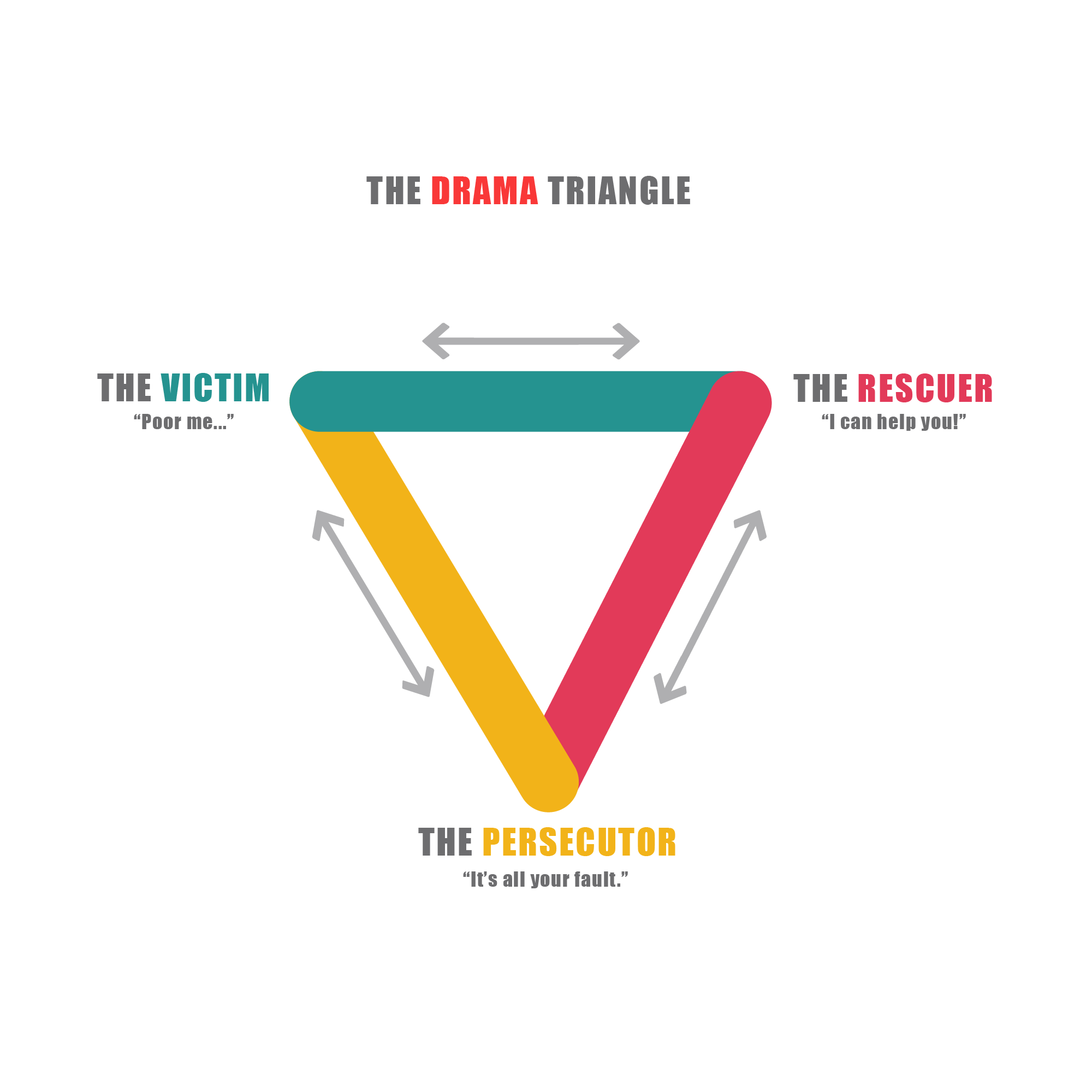
Here’s what’s crucial: all three are manipulation. Even being the victim is a way to control others - making them feel responsible for your emotions. Even rescuing is a form of dominance - keeping others dependent on you.
You play different roles with different people. Victim with your mom. Rescuer with your partner. Persecutor with your kids. Different relationships, same dance.
Your parts do this to each other too. Your inner critic persecutes your creative part. Your achievement part rescues your worth. Your hurt part plays victim to get the inner rescuer’s attention.
The positions rotate: Persecutor creates victim, victim draws in rescuer, rescuer becomes persecutor when victim won’t get better, old persecutor becomes victim, round and round it goes.
The Fourth Position: The Bystander
There’s actually a fourth position people don’t talk about enough: The Bystander.
The bystander watches the drama unfold but “doesn’t want to get involved.” Or they judge the victim—”they brought this on themselves.” Or they stay “neutral” while someone gets hurt.
This isn’t actually neutral. Bystanding is a form of persecution. By not intervening, by staying silent, by pretending not to see—you’re allowing the harm to continue. Your silence becomes complicity.
Many people rotate through all four positions: persecutor, victim, rescuer, and bystander—depending on the relationship and what feels safest in the moment.
Three Places the Tangle Lives
The rat tangle exists at three levels, and you have to work with all three:
1. The Original Family Tangle - Where you learned these patterns. Even if you left decades ago, this is the template that got wired into your nervous system.
2. Your Internal Tangle - Your parts relating to each other using the same dynamics your family used. Your inner critic attacks like your father did. Your people-pleaser submits like your mother did. Your parts are tangled with each other.
3. The Tangle You Recreate - The relationships you form as an adult. You’re typically drawn to people with similar or complementary tangles. You think you’re choosing differently, but you’re choosing the familiar dysfunction because your nervous system recognizes it as “home.”
This is why leaving your family doesn’t automatically solve the problem. You carry the internal tangle with you, and you recreate external tangles that feel similar.
The work isn’t just about understanding your family—it’s about untangling at all three levels simultaneously.
The Nervous System Trap
Those rat tails aren’t just tails - they’re spinal cords. The central nervous system. The core structure that connects each creature to its body, to space, to the earth’s gravity.
When you’re in the rat tangle, your nervous system is constantly in some version of fight, flight, or freeze. This creates dualistic consciousness—everything becomes binary:
Life or death
Good or bad
Us or them
Safe or dangerous
There’s no room for nuance, for complexity, for “both/and.” The nervous system in survival mode can only handle “either/or.” This is why rat tangle arguments feel so absolute, why conflicts escalate so quickly, why people can’t find middle ground.
You’re not being irrational. Your nervous system is doing exactly what it evolved to do when trapped with no escape route—treat everything as an immediate threat to survival.
This is what happens in tangled families. Your nervous system gets wired to other people’s nervous systems. Your emotional state depends on their mood. Their problems become your emergencies. You can’t relax because someone else might need you to manage their feelings.
Your Body Remembers
You can’t sense your own body clearly. You can’t feel your own boundaries. You can’t tell where you end and other people begin.
Your connective tissue—the fascia that wraps every muscle, organ, and nerve—holds the memory of every time you couldn’t escape. You hold defensive postures. You armor against expected attacks. You collapse into learned helplessness. The patterns live in your cells, not just your thoughts.
You’re not just psychologically tangled. You’re neurologically tangled.
The Hidden Cost: Shame as Survival Glue
There’s something underneath all these patterns that we haven’t named directly yet: shame.
Not “I did something wrong” shame. The deeper kind: “I am wrong. My existence is the problem.”
When you’re a small child in the rat tangle, you can’t afford to see your caregivers as unreliable or harmful. Your survival depends on them. So your psyche makes an impossible trade: I’ll carry the badness so I can keep you good enough to need.
Shame becomes the glue that holds the attachment bond together - even when that bond is toxic. It’s not a thinking mistake; it’s attachment logic. If the parent is the problem, you’re doomed. If you’re the problem, maybe you can fix it.
This is why you feel ashamed when you recognize these patterns in yourself. It’s not just about seeing the dysfunction - it’s about the ancient fear that being seen as flawed means the bond will break and you won’t survive.
The rat tangle doesn’t just trap you with external threads. It plants shame deep in your nervous system, and that shame becomes the engine that keeps the patterns running - even decades after you’ve left the original tangle.
Understanding this shame is essential. Because in the next post, we’ll explore how that shame creates a specific injury - the narcissistic wound - that makes escape from the tangle nearly impossible.
How You Got This Way
You didn’t choose this. It happened to you before you could even talk.
Human babies are helpless longer than almost any other mammal. Most animals can walk, run, or at least cling to their mother within hours or days. But humans? You need caregivers for at least sixteen years to survive, and really much longer to thrive.
During this incredibly long dependency period, your nervous system is learning: “This is how relationships work.” If your caregivers are stressed, fighting, using you to meet their emotional needs, competing with each other through you - that becomes your template for “normal.”
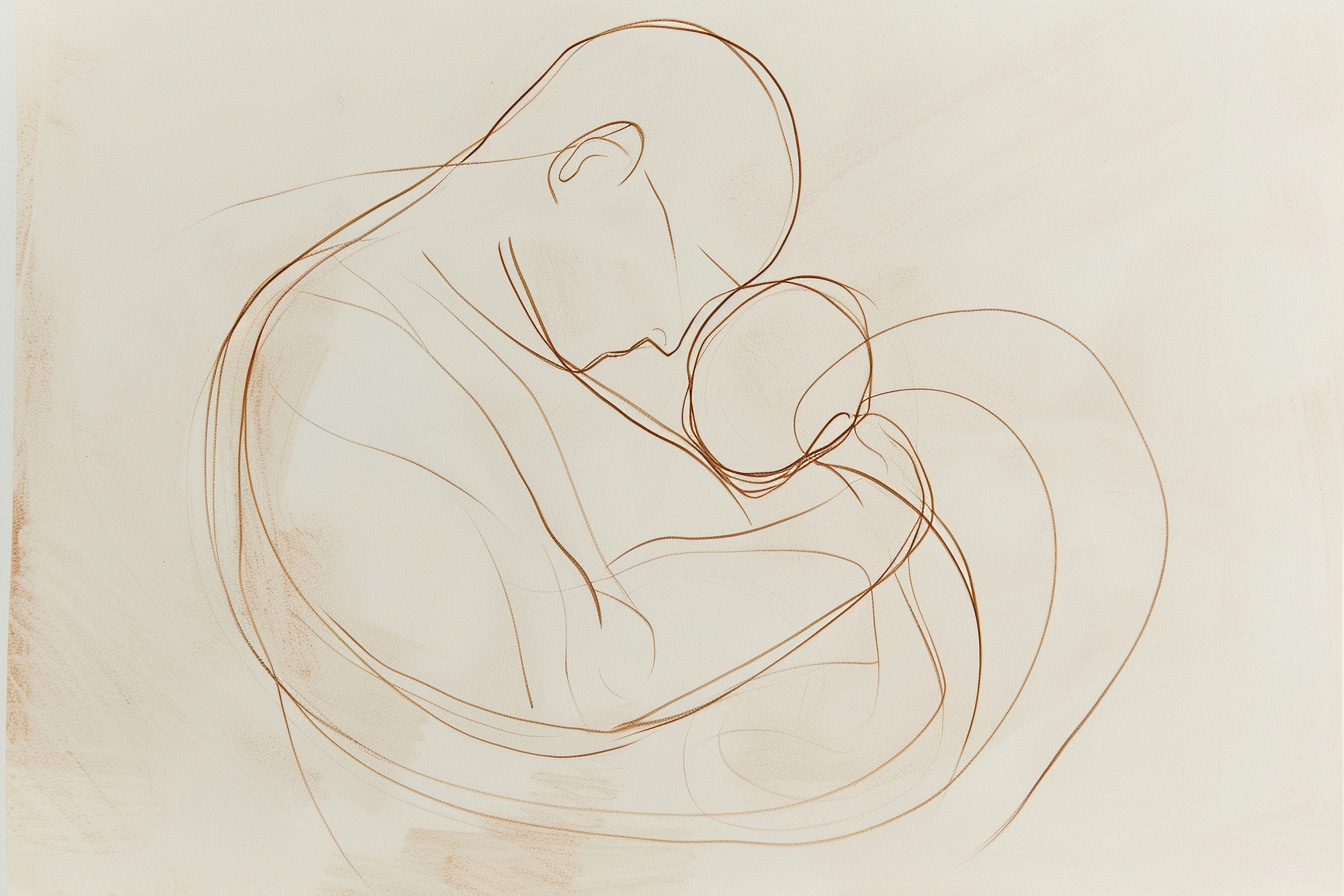
The mother-baby unit is one identity system. When you’re born, there’s no clear boundary between you and your primary caregiver. You’re learning to be human by absorbing their patterns, their nervous system states, their ways of relating. If those patterns are tangled and desperate, that’s what gets wired into your system as “how people connect.”
And here’s what makes this harder: most families aren’t operating in optimal conditions. Economic pressure, social isolation, lack of community support—these aren’t personal failings. They’re conditions that make rat tangle dynamics more likely. When families are under stress and cut off from broader support networks, even well-intentioned parents struggle to provide consistent attunement.
Your parts formed to handle different relationship dynamics. The part that learned to be charming when dad was angry. The part that learned to be sick when mom was overwhelmed. The part that learned to achieve when love felt conditional. Each part developed brilliant strategies to navigate impossible situations.
But those parts are still relating to each other the way your family related to each other. If your family operated through persecutor, victim, and rescuer patterns, that’s how your parts learned to communicate internally.
Why Different Parts Are Stuck in Different Places
Here’s why change feels so chaotic: your parts aren’t all in the same stage of learning.
Remember the Stages of Competence from Part 3? Stage 1 is unconscious incompetence (you don’t know what you don’t know). Stage 2 is conscious incompetence (you see the problem but don’t know how to fix it). Stage 3: conscious competence (you’re actively learning). Stage 4: unconscious competence (it’s become natural).
Your parts are scattered across all four stages:
Your people-pleasing part (Stage 1) genuinely believes that self-sacrifice is love. It has no idea it’s manipulating people or that boundaries are even possible. When the wise part tries to set a boundary, the people-pleasing part experiences this as cruelty.
Your critical part (Stage 2) is starting to see that constant self-attack doesn’t actually improve performance. It notices the pattern but doesn’t know how else to motivate you. It’s caught between awareness and incompetence—the most uncomfortable stage.
Your boundary-setting part (Stage 3) is practicing saying no. It’s conscious and deliberate, but it takes enormous effort every single time. This part gets exhausted easily and often gives up, letting the people-pleasing part take over again.
Your wise part (Stage 4) can see the rat tangle clearly and knows healthier ways of relating exist. It can be present with discomfort, set boundaries without guilt, and offer genuine care without rescuing.
This creates internal conflict that feels like war. The people-pleasing part (Stage 1) starts to say yes. The critical part (Stage 2) attacks it. The boundary-setting part (Stage 3) tries to intervene but gets exhausted. The wise part (Stage 4) watches, frustrated. And you stand there wondering why you can’t “just change.”
You’re not failing. Your parts are at different stages of competence, trying to work together without a shared language or understanding.
No wonder you feel inconsistent. You’re not one person trying to change - you’re multiple parts at different stages of learning, often working against each other.
The Dance of Distorted Qualities
When you look closely, each drama triangle role is trying to get you something essential—something your system needs to survive and thrive. But it’s getting you the distorted version:
The Persecutor distorts Power into control and dominance. The Rescuer distorts Love into dependency-creating caretaking. The Victim distorts Presence into strategic helplessness. The Bystander abandons Presence entirely.
Power, Love, Presence—these three qualities are meant to flow together and support each other. In the rat tangle, they fracture into survival roles that mimic connection but keep everyone trapped.
This is why you can’t heal just one quality in isolation. They’re interdependent. When you start restoring one genuinely, it begins restoring the others.
⚡ Pause here if you need to. This is a lot to take in. Notice what’s arising in your body right now. ⚡
Recognizing the Pattern Is Only the Beginning
If you’re recognizing yourself in these patterns—the drama triangle, the three levels of tangle, the parts at different stages—that recognition matters. It’s the foundation for everything that comes next.
But recognition alone doesn’t explain something crucial: why you can’t escape these patterns even when you see them clearly.
The rat tangle shows you the dance. But every dance is powered by the wound underneath—the wound that teaches you to equate survival with losing yourself.
People who understand the rat tangle intellectually still find themselves:
Drawn back to the same dysfunctional relationships
Recreating the same dynamics with new people
Unable to maintain boundaries even when they know they should
Feeling like they’re watching themselves repeat patterns they hate
Why? Because the rat tangle doesn’t just create behavioral patterns. It creates a specific injury—one so fundamental it shapes your sense of self, your capacity for satisfaction, your ability to know where you end and others begin.
This injury has a name. It’s been forming since childhood, layer by layer, every time you had to lose yourself to stay safe. Every time you learned that love equals control. Every time you became hungry for something you couldn’t name.
And this injury—narcissistic wounding—is what makes you vulnerable to staying trapped. More than that: it’s what creates the perfect conditions for something far more dangerous to take root.
In the next post, we’ll explore:
Exactly how the rat tangle creates this wound
Why you couldn’t recognize abuse as abuse when you were young
How you learned to lose your sense of self entirely
Why these patterns have become epidemic in our culture
What this injury makes you vulnerable to
The tangle shows you the pattern.
The wound shows you why you can’t escape it.
Until then, practice noticing: Where do you feel the tangle right now? What sensations arise when you think about these patterns? Your body already knows more than your mind does. Listen to it.
Part 5: “The Narcissistic Wound - The Hunger That Can’t Be Satisfied” publishes in 3-4 days.
If you’re ready to map these patterns more precisely across all dimensions of your life, take the Unveiling Self Assessment Understanding your specific patterns is the first step toward untangling them.